
Occupational Therapy
Helping individuals of all ages develop the skills they need to participate fully in daily life — from self-care and play to learning and work.
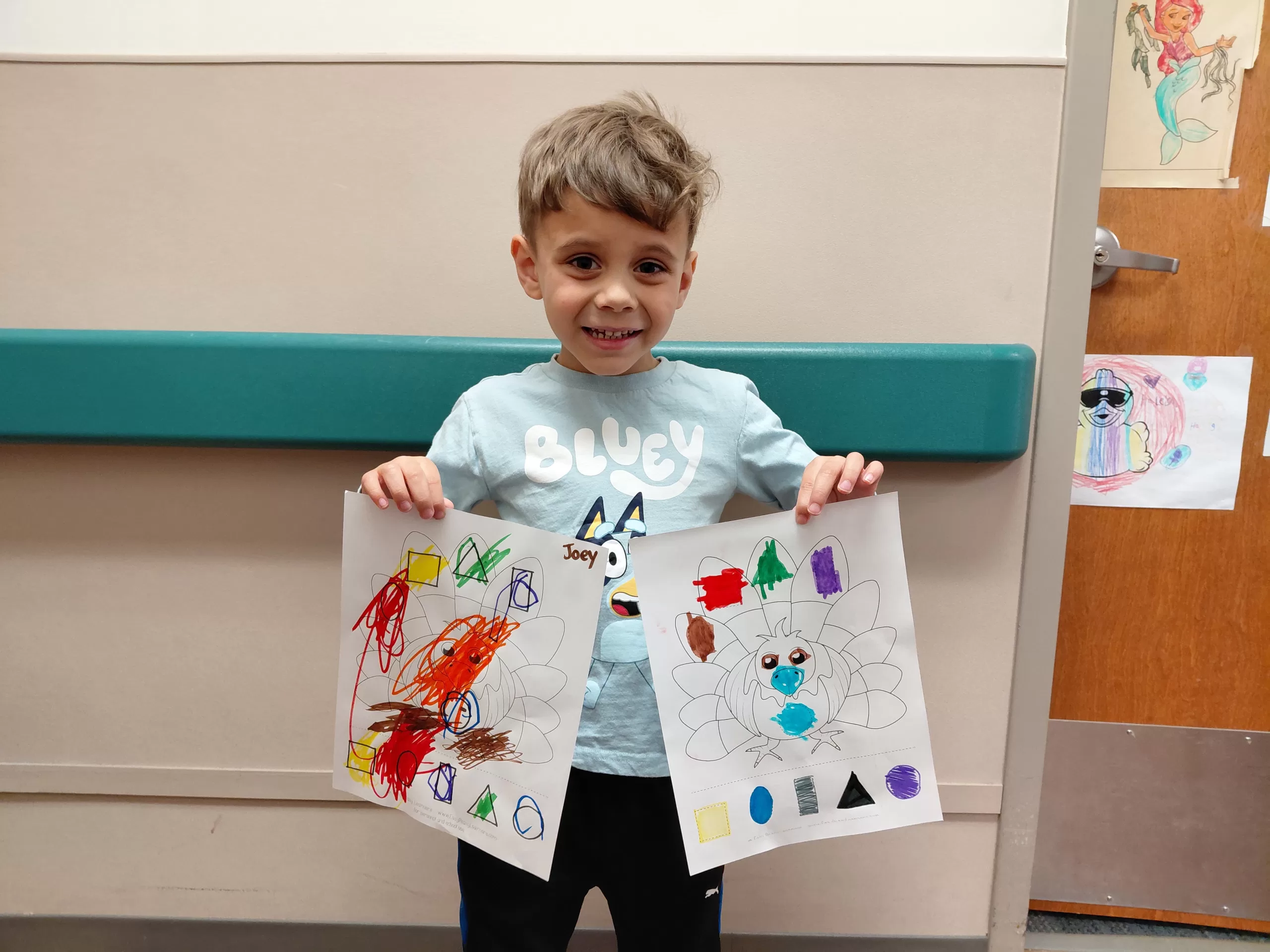
Making Everyday Activities Possible
The Occupational Therapist's role is to help patients make the activities that occupy their day as independent, productive, and energy efficient as possible.
For youth and adult patients, this may include developing skills needed for handwriting and typing, as well as activities of daily living including bathing, dressing, grooming, eating, toileting, meal preparation, home management, community living skills, and leisure skills.
What We Offer
Simulated Therapy Apartment
Our cutting-edge Simulated Therapy Apartment with "universal design" creates a realistic home environment where patients can practice everyday skills. From the kitchen to the bathroom, patients work on real-life tasks in a safe, supportive setting — building confidence before transitioning skills to their own homes.
Conditions We Treat
Success Stories
Meet Aiden
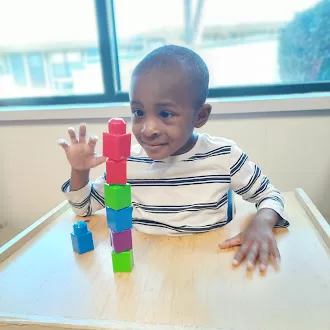
When Aiden first started at URS in December 2023, he demonstrated challenges with any form of purposeful play. He threw all objects that were presented to him, could not be parted from a desired comfort item, and was unable to regulate his emotions which hindered his ability to engage with his environment.
With the help of therapies and our Gold-Rated childcare center, he has made leaps and bounds in his skills and abilities. Aiden is now able to engage in many different forms of play activities such as stacking blocks, putting items into containers, and interacting with cause/effect toys. He also responds to his name to transition to/from therapy and follows a routine to complete simple tasks and play schemes.
Recently, he mastered a simple five-piece puzzle without any help or throwing of the pieces! Keep it up, Aiden!
Meet Jalen
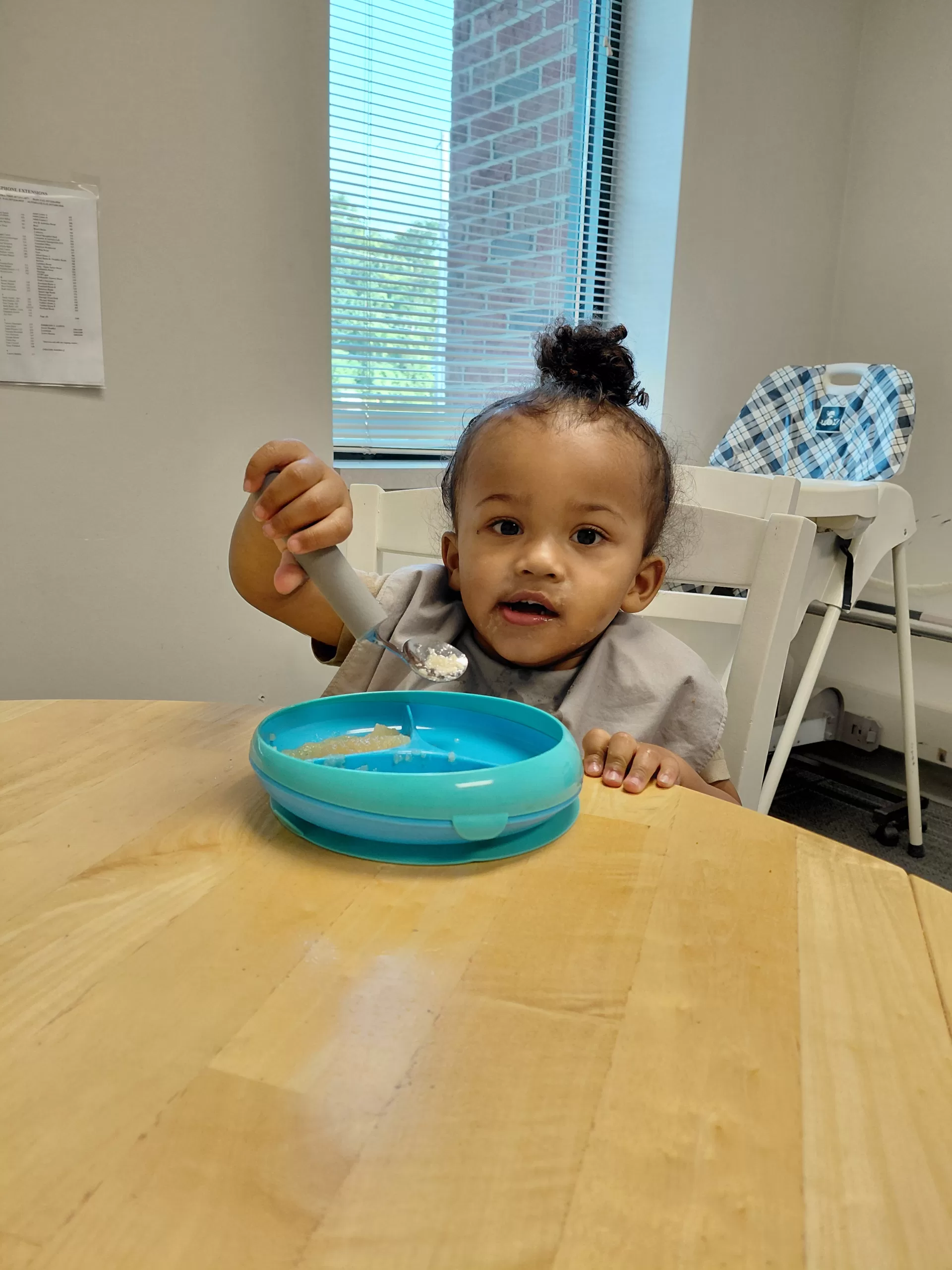
Jalen is a 2.5-year-old with cerebral palsy. He has been working hard in occupational therapy for 8 months to improve his ability to self-feed.
Using adaptive equipment such as a bent handle weighted spoon and a suction cup plate with high lip dividers, he is now able to feed himself!
From needing full assistance to independent self-feeding in just 8 months!

Meet Connor
Connor is a 4-year-old who was born at 23 weeks. He has been receiving occupational therapy since August 2024. He struggles with touching slimy, sticky, and wet substances and often becomes very upset when he encounters these textures.
This sensory challenge affects his ability to engage in age-appropriate tasks like finger painting, using liquid glue, and playing in the sand. In the past, beach trips were challenging for Connor and his family because he refused to sit on or touch sand.
Due to an upcoming beach trip, Connor began working on playing in both wet and dry sand in OT. Over the course of several months, he learned to tolerate the texture on not only his hands, but also his feet.
He recently returned from Florida and successfully enjoyed a long beach day. His smiles say it all!
Meet Our Occupational Therapists
Sarah Rock
Sara Hudson
Ready to Get Started?
Contact us to learn more about Occupational Therapy at URS.
937.853.5431Access Patient Portal →